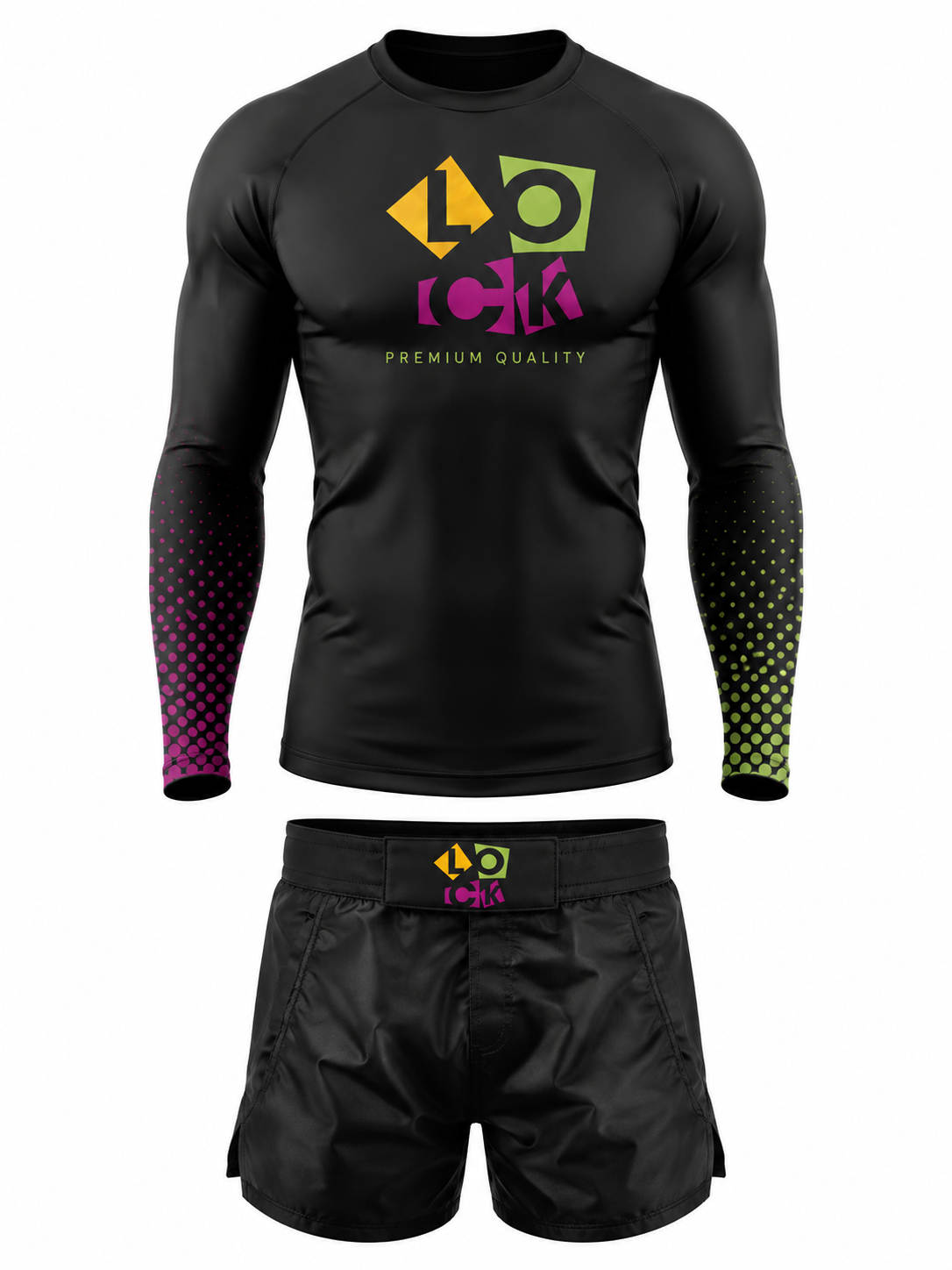
1. Fabric Specifications & Composition
The base material is the most crucial element. It must provide compression, maintain shape under extreme stretching, and perfectly absorb sublimation inks.
- Material Blend:80% Polyester / 20% Spandex (Elastane) or 85% Polyester / 15% Spandex.
- Why Polyester? Sublimation printing requires high-percentage polyester fibers to open up under heat and lock the gas dye permanently into the core fabric.
- Why Spandex? Provides the necessary elasticity and compression.
- Fabric Weight (GSM):220 GSM to 240 GSM (Grams per Square Meter).
- Quality standard: Anything below 200 GSM is too thin and will become sheer/translucent when stretched. A 220–240 GSM weight ensures optimal thickness, durability against mat burn, and zero transparency while remaining breathable.
- Stretch Profile:4-Way Stretch Technology. The fabric must stretch vertically and horizontally, adapting to intense body movements without warping the printed artwork or restricting range of motion.
2. Printing Quality & Sublimation Standards
Dye-sublimation is the gold standard for performance athletic apparel because the ink chemically fuses with the fibers instead of sitting on top.
- Zero Surface Texture: The finished print must be completely imperceptible to the touch. It cannot have a raised rubbery or plastic feel (unlike screen printing or heat transfers).
- Anti-Peeling & Anti-Cracking: Because the ink is deep within the yarns, the design will never crack, peel, fade, or flake off, even across highly stressed areas like the shoulders and chest.
- Color Saturation & Resolution: Sublimation allows for unlimited color options, intricate gradients, and high-resolution details (such as complex vector line work or detailed themes). The fabric must yield sharp, high-contrast imagery with precise edge definition.
3. Stitching & Construction Specifications
The way a rash guard is sewn together determines its structural longevity and the wearer's comfort during high-friction training.
- Seam Type:Reinforced 4-Needle 6-Thread Flatlock Stitching.
- Quality standard: Flatlock stitching creates a completely flat seam inside and out. This eliminates seam bulk and prevents skin chafing or friction burns during heavy grappling or training.
- Thread Type: High-elasticity nylon or polyester threads that expand and contract along with the 4-way stretch fabric without snapping.
- Panel Construction: Ergonomic multi-panel construction tailored to the body’s natural lines to provide a locked-in, "second skin" fit that prevents the garment from riding up or shifting.
4. Performance & Fabric Treatments
Premium combat and athletic apparel should undergo specific chemical or mechanical treatments during production to elevate its quality:
- Moisture-Wicking & Quick-Dry: The material must quickly draw sweat away from the skin and pull it to the outer surface of the garment for fast evaporation, keeping the athlete cool and lightweight.
- Anti-Bacterial / Anti-Odor Treatment: A critical standard for close-contact combat sports to inhibit the growth of bacteria and microbes on the fabric between washes.
- UV Protection: A built-in rating of UPF 50+ to protect against solar radiation, ensuring versatility for both outdoor mats and water/surf sports.
- Waistband Security: The inclusion of an internal silicone gel grip lining along the bottom hem to keep the rash guard securely pinned down over shorts or spats during intense training.